Cron Crew vs Honeybadger Check-ins
Honeybadger built a strong reputation in the Ruby community. For Ruby teams using Honeybadger, check-ins are natural. For everyone else, consider the alternatives.
Cron Crew vs Honeybadger Check-ins
Honeybadger has built a strong reputation in the Ruby and Rails community for exception monitoring. Over time, they expanded into uptime monitoring and check-ins (their term for cron/heartbeat monitoring). For Ruby teams already using Honeybadger, check-ins are a natural extension. For everyone else, the choice requires more consideration.
This comparison examines when Honeybadger's bundled approach makes sense versus when a standalone cron monitoring tool is the better fit. For a complete market overview, see our guide to the best cron monitoring tools.
Quick Comparison
| Feature | Cron Crew | Honeybadger |
|---|---|---|
| Primary focus | Cron monitoring | Error tracking + uptime + cron |
| Free tier | 15 monitors | 1 monitor (bundled with errors) |
| Standalone | Yes | No (bundled product) |
| Entry price | $15/mo | $26/mo (includes errors) |
| Best ecosystem | Any stack | Ruby/Rails |
| SDK languages | N/A (HTTP pings) | 11 languages |
Honeybadger Overview
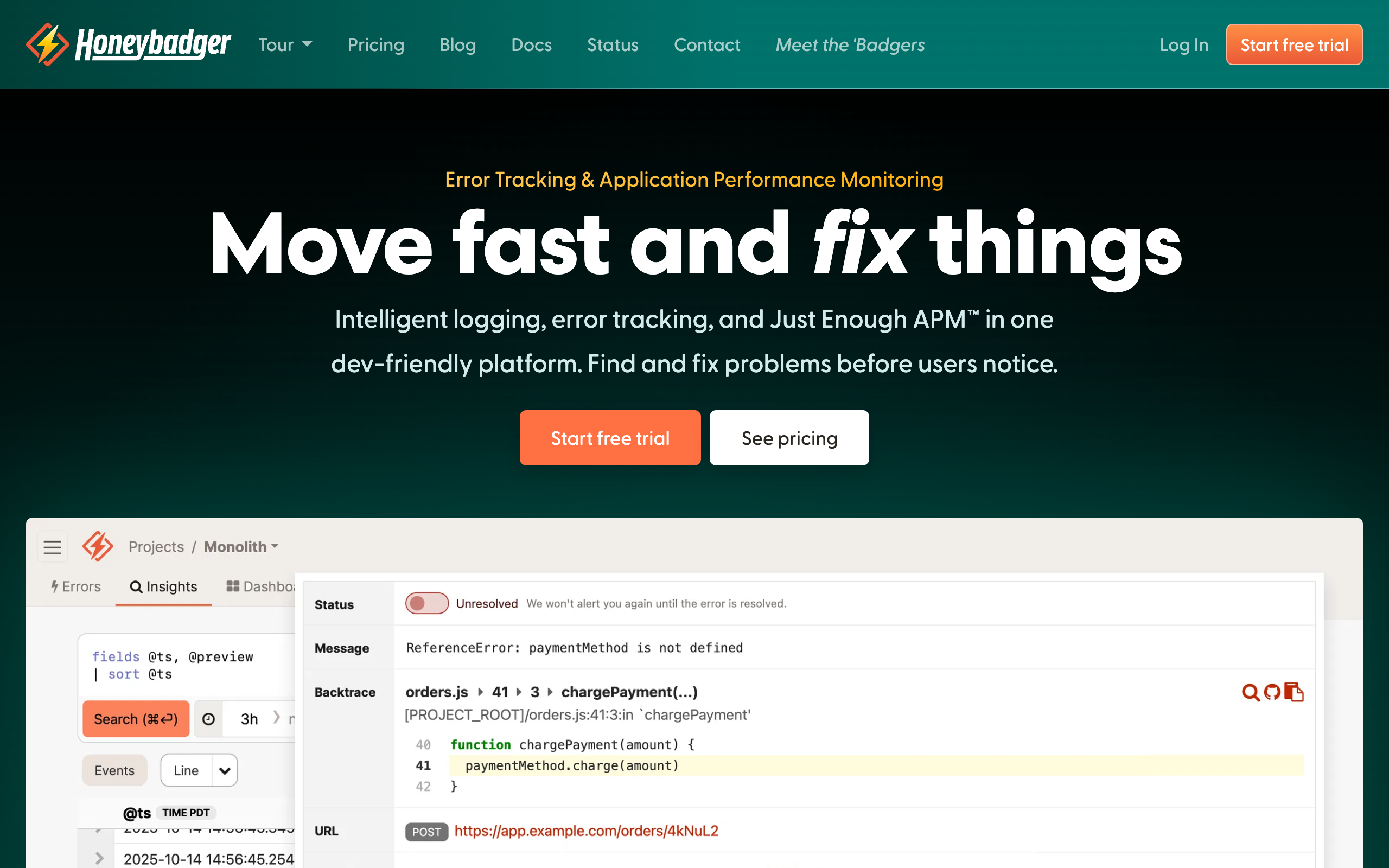
Honeybadger was founded in 2012 as an error tracking service, initially focused on the Ruby on Rails ecosystem. Since then, they have expanded to support 11 programming languages and added uptime monitoring and check-ins.
What Honeybadger offers:
- Error tracking: Their core product and primary strength
- Uptime monitoring: Website availability checking
- Check-ins: Cron job and heartbeat monitoring
- Unified platform: All three products in one dashboard
Honeybadger's strengths:
- Ruby ecosystem: Deep Rails integration, strong community presence
- Bootstrapped and stable: Profitable company focused on developers
- Mature SDKs: Well-developed integrations across languages
- Good documentation: Clear, developer-focused documentation
The bundled approach:
Honeybadger sells error tracking, uptime, and check-ins as a bundle. You cannot buy check-ins separately. The minimum plan includes all three.
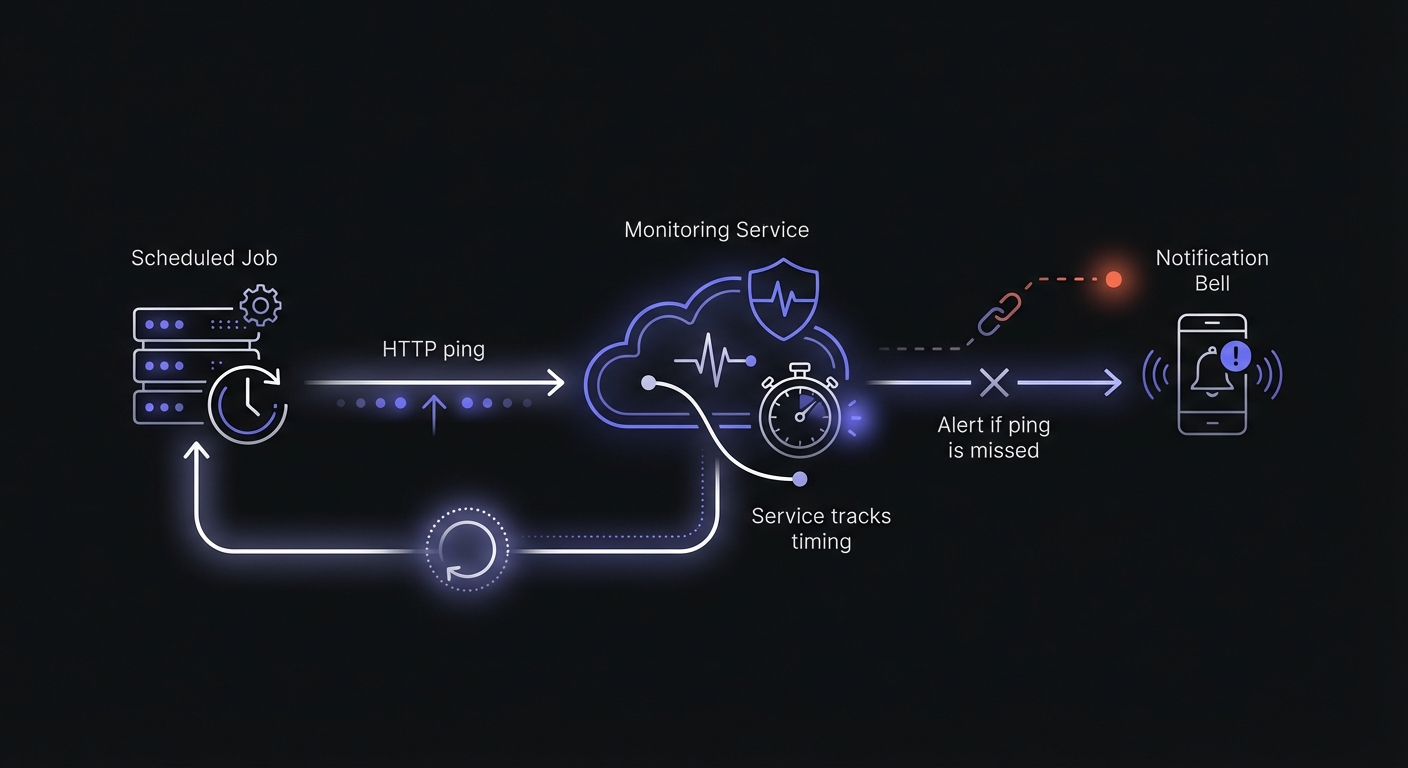
How check-ins work: Your scheduled job runs, then pings a unique URL. The monitoring service tracks timing and alerts you if the ping never arrives or arrives late. Both Honeybadger and Cron Crew use this heartbeat pattern.
Cron Crew Overview
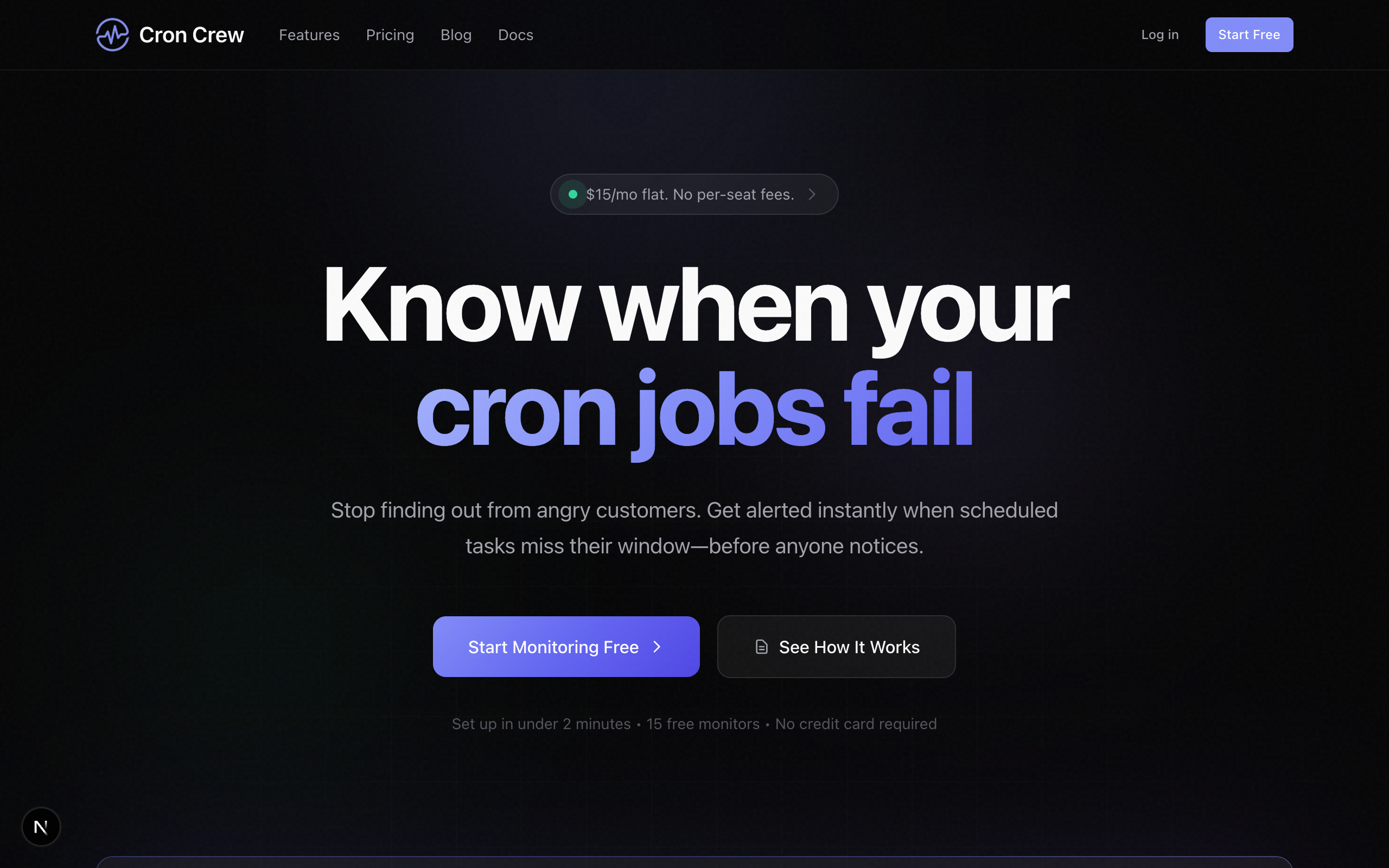
Cron Crew is a standalone cron monitoring service focused entirely on scheduled job monitoring.
Key characteristics:
- Single focus: Cron monitoring only, not bundled with other products
- Framework agnostic: Works with any language via HTTP pings
- No error tracking: Does not compete with your existing error tracker
- Simple pricing: Pay for cron monitoring, not a bundle
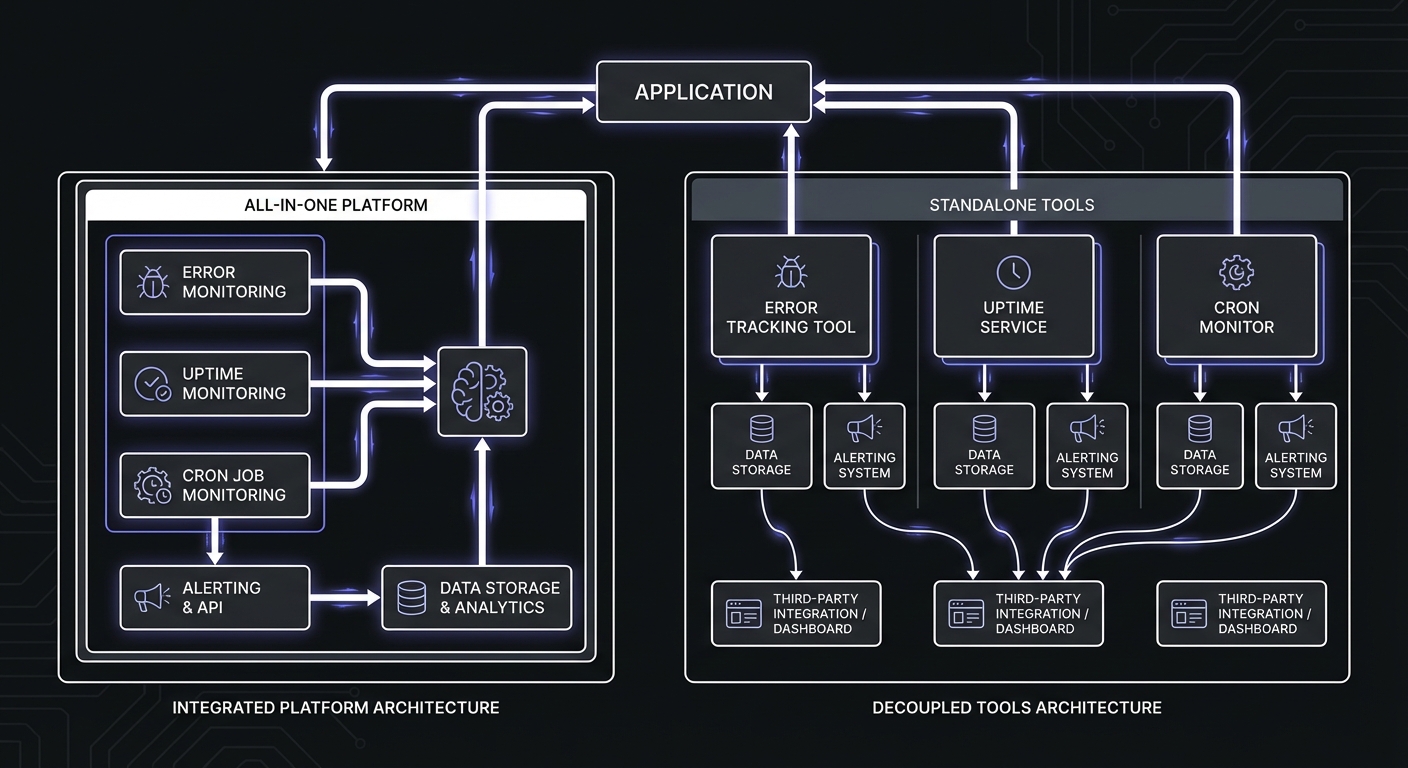
The Bundled Approach Consideration
The key question in this comparison is whether you want cron monitoring bundled with error tracking.
Benefits of Bundled (Honeybadger)
One vendor, one bill: If you need error tracking and cron monitoring, Honeybadger provides both under one account.
Integrated experience: Same dashboard, same notifications setup, same team permissions.
Ruby ecosystem fit: For Rails teams, Honeybadger's deep integration is valuable.
Drawbacks of Bundled
Paying for what you do not need: If you already have error tracking (Sentry, Bugsnag, Rollbar), you are paying for duplicate functionality.
Higher base cost: Honeybadger starts at $26/month because you are getting multiple products.
Switching cost: If you want to change error trackers, you also have to migrate cron monitoring.
When Standalone Makes Sense (Cron Crew)
You already have error tracking: Most teams already use an error tracking service. Adding Honeybadger means paying for overlapping functionality.
You want focused tools: Best-of-breed approach: dedicated tools for dedicated problems.
You want flexibility: Change any tool independently without affecting others.
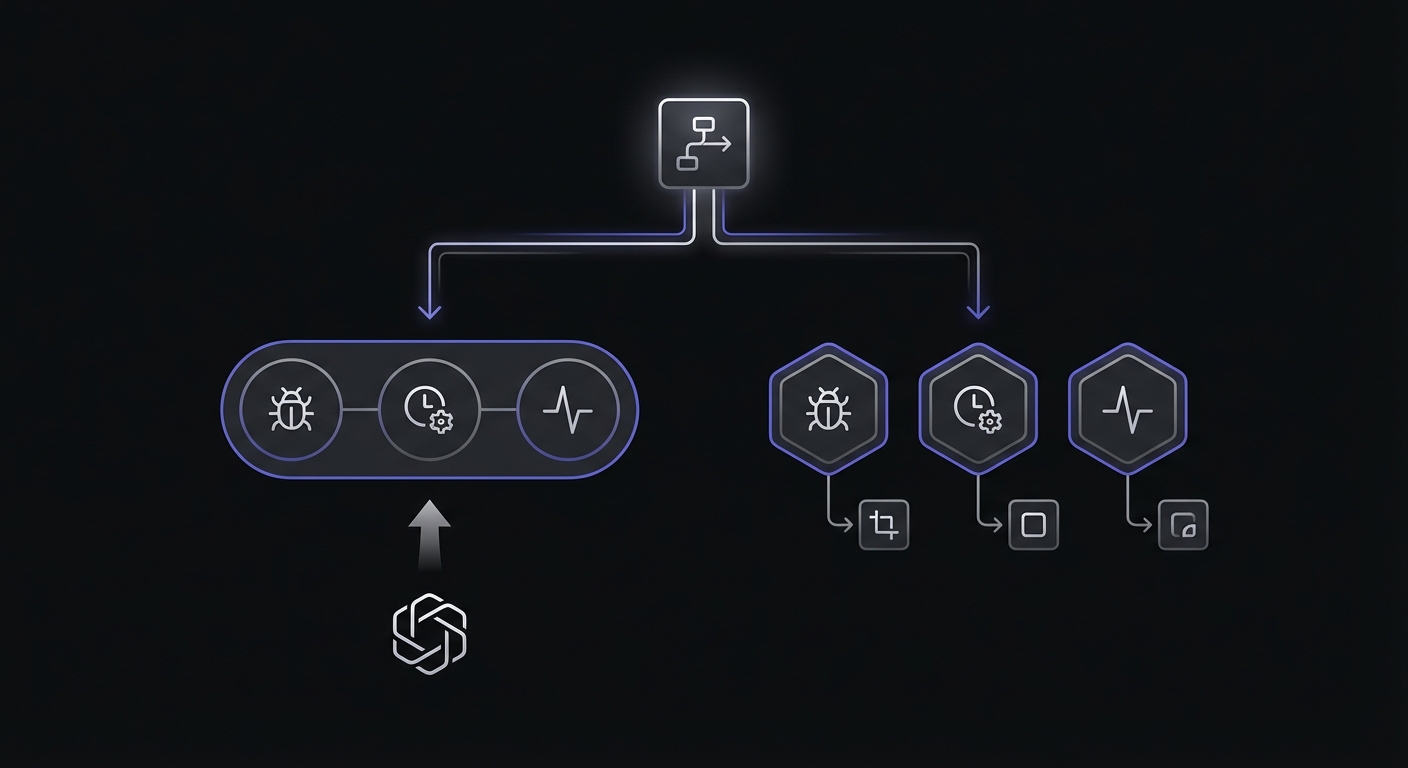
Feature Comparison
Where Honeybadger Wins
Ruby/Rails integration: Honeybadger was built for Ruby and it shows. The Rails integration is polished:
# Honeybadger check-in in Rails
class BillingJob < ApplicationJob
  def perform
    # Job logic
  end

  after_perform do
    Honeybadger.check_in('billing-job')
  end
end
Error correlation: When a check-in fails, you can correlate with exceptions captured by Honeybadger's error tracking. This integration is the primary advantage of a bundled platform.
Mature SDKs: 11 language SDKs with years of development:
# Honeybadger check-in in Python
import honeybadger

def process_invoices():
    # Job logic
    pass

honeybadger.check_in('invoice-processing')
// Honeybadger check-in in Node.js
const Honeybadger = require('@honeybadger-io/js');
async function syncInventory() {
// Job logic
}
Honeybadger.checkIn('inventory-sync');Unified platform: Error tracking, uptime, and check-ins in one place.
Where Cron Crew Wins
Standalone service: No bundled products you may not need.
Framework agnostic: Works identically with any language or framework:
# Works with any stack
curl -fsS https://your-product.example/ping/billing-job
Lower cost for cron monitoring alone: $15/month versus $26/month when you only need cron monitoring.
No error tracking overlap: Use with your existing error tracker without redundancy.
Generous free tier: 15 free monitors versus 1.
Feature Parity
Both handle core cron monitoring:
- Alert notifications (email, Slack, webhooks)
- Dashboard visibility
- API access
- Team collaboration
- Scheduling flexibility
Grace Periods
Both tools support grace periods, which give jobs extra time to complete before triggering alerts. If your backup job usually finishes in 45 minutes but occasionally takes 90 minutes, set a grace period to avoid false alarms.
Honeybadger allows grace periods on all plans. Cron Crew includes configurable grace periods with expected duration tracking.
Alert Channels
| Channel | Cron Crew | Honeybadger |
|---|---|---|
| Yes | Yes | |
| Slack | Yes | Yes |
| Webhooks | Yes | Yes |
| PagerDuty | Yes | Yes (premium) |
| SMS | No | Yes (premium) |
| Advanced routing | No | Business+ plans |
Honeybadger reserves advanced alert routing for Business plans ($80/mo+). Cron Crew provides direct integrations on all paid plans.
Pricing Comparison
Honeybadger Pricing
Honeybadger bundles errors, uptime, and check-ins. Uptime monitors include check-ins:
| Plan | Price | Errors | Monitors/Check-ins | Data Retention | Users |
|---|---|---|---|---|---|
| Developer | Free | 5K/mo | 1 | 15 days | 1 |
| Team | $26/mo | 50K/mo | 5 | 90 days | Unlimited |
| Business | $80/mo | 50K/mo | 5 | 180 days | Unlimited |
The check-in limits are notable: only 1 on Developer, only 5 on Team and Business plans. To get more monitors, you need to add them separately or upgrade to higher volume tiers.
Cron Crew Pricing
| Plan | Price | Monitors | Data Retention | Users |
|---|---|---|---|---|
| Free | $0 | 15 | 7 days | Unlimited |
| Starter | $15/mo | 50 | 30 days | Unlimited |
| Pro | $29/mo | 100 | 90 days | Unlimited |
Cron Crew includes unlimited team members on all plans, including free.
Value Analysis
If you need error tracking AND cron monitoring AND are a Ruby team, Honeybadger's bundle may provide value.
If you already have error tracking or need more check-ins than Honeybadger's tiers allow, Cron Crew is more cost-effective.
Scenario: Team with existing error tracking, 30 cron jobs
| Service | Cost | Check-ins Included |
|---|---|---|
| Honeybadger (Business) | $80/mo | 5 (need add-ons) |
| Cron Crew (Starter) | $15/mo | 50 |
| Difference | $65/mo saved | 45 more monitors |
Plus, with Honeybadger you are paying for error tracking you do not need. For a full breakdown of costs across all providers, see our cron monitoring pricing comparison.
Best Fit: Honeybadger
Honeybadger is the better choice when:
You are a Ruby/Rails team: Honeybadger's Ruby integration is excellent. If Ruby is your primary language, the ecosystem fit matters.
You need error tracking too: If you do not have error tracking and need both, Honeybadger's bundle provides value.
You want one vendor: Consolidating under a single provider has organizational value for some teams.
Check-in volume is low: Honeybadger's limits work if you have few cron jobs to monitor.
You value the Ruby community: Honeybadger is well-respected in the Ruby world, and supporting ecosystem tools matters to you.
Best Fit: Cron Crew
Cron Crew is the better choice when:
You already have error tracking: Do not pay for overlapping functionality. Use Cron Crew alongside your existing error tracker.
You are not a Ruby shop: If you are running Python, Node, Go, or mixed stacks, Honeybadger's Ruby strength is less relevant.
You need more check-ins: Honeybadger's limits (1 on Developer, 5 on Team/Business) may not fit your needs. Cron Crew offers 50 monitors for $15/month.
You want standalone flexibility: Change error trackers without affecting cron monitoring.
You want a generous free tier: 15 free monitors covers many small projects.
Ruby Teams: An Honest Take
If you are running a Ruby on Rails application and do not have error tracking, Honeybadger deserves serious consideration. Their Rails integration is mature, the team understands Ruby developers, and the product is solid.
But most Ruby teams already have error tracking. Adding Honeybadger for check-ins means either:
- Switching error trackers (significant migration effort)
- Running redundant error tracking (paying twice for the same thing)
- Using Honeybadger just for check-ins (paying for a bundle when you need one feature)
If you are in scenario 3, Cron Crew is more practical. Use your existing error tracker for errors, use Cron Crew for cron monitoring.
Mixed Stack Considerations
Many teams run mixed technology stacks:
- Rails API with React frontend
- Python data pipelines
- Node.js microservices
- Bash scripts for ops tasks
Honeybadger works across languages, but the Ruby integration is their strength. For mixed stacks, a language-agnostic tool like Cron Crew may be simpler: one approach for all your cron jobs regardless of implementation language.
# Same pattern for any job
0 * * * * /path/to/ruby-job.rb && curl -s https://your-product.example/ping/ruby-job
0 * * * * python /path/to/python-job.py && curl -s https://your-product.example/ping/python-job
0 * * * * /path/to/bash-script.sh && curl -s https://your-product.example/ping/bash-job
Conclusion
Honeybadger is an excellent product for Ruby teams needing error tracking. Their check-ins feature is a reasonable addition if you are already in the Honeybadger ecosystem.
For teams with existing error tracking, non-Ruby stacks, or anyone wanting cron monitoring without bundled products, Cron Crew is the more focused choice. You get dedicated cron monitoring at a lower cost without paying for functionality you do not need.
Try Cron Crew's free tier alongside your existing error tracker. You get the best of both: your preferred error tracking tool plus purpose-built cron monitoring.
Not sure which tool is right for you? See our guide on how to choose cron monitoring for your team.